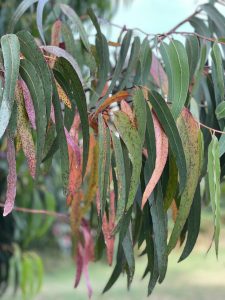

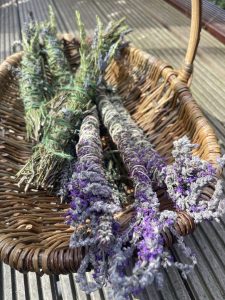
Essential oils present in fragrant plant materials, the aroma molecules, particularly those from trees are phytoncides. These are volatile organic compounds emitted by plants, like pine, eucalyptus, spruce, cedar, etc., which include terpenes, like alpha-pinene, are what make forests have such an uplifting quality.
Essential oils exude from plants into their ‘headspace,’ where we breathe them in when walking in nature. They bypass the blood-brain barrier, via our limbic system, affecting our nervous systems so beneficially. Over the millennia humans have devised many methods to capture this essence of the plant, that so many have chosen to seek connection with and feel the divine.
Aroma evokes memory, but nobody can explain how the aroma of jasmine can make a picture of a garden on a warm, moon-lit night be conjured in your head. It also evokes emotion, the two often being connected. Time and space mean nothing to aroma. Source: ‘The Fragrant Heavens’ Valerie A. Worwood
Essential oils contain the mystery of life – they capture the sun in photosynthesis, they are in essence, liquid light. With an etheric quality, essential oils activate the receptors of love, compassion and empathy.
The flower spike of true lavender, Lavendula augustifolia, emits a mobile clear to pale yellow fluid with a light sweet-herbaceous floral odour, with fant fresh overtones, and mild woody undertones. As a perfume, its head note is of medium intensity, but is not long-lasting. Extraction is by steam distillation of the fresh or wilted, dried flowering spikelets in July and August. It will generally yield 1 kg of oil from between 100-150 kg of the herb.
Lavendin is a hardy hybrid of lavender (Lavender augustifolia) and spike lavender (L. latifolia) that originated with natural cross-pollination by bees at about 700-800 m altitude. The clones usually available are Super, Abrialis and Grosso. The latter is grown at Jersey Lavender. This species is highest in essential oil content, so the yield is excellent…as little as 30-40 kg of plant material is necessary to produce 1 kg of Lavandin essential oil. It’s mainly used for industrial purposes, including in perfumery. It has a more sweet-fruity-green-herbaceous aroma than true lavender, with fresh-spicy-camphoraceous topnotes.
Therapeutic functions and indications:
It’s a mild remedy with no cumulative toxicity. Non-skin irritant, non-sensitizing. It’s often called for when the following symptoms are present – irritability, mood swings, emotional confusion, negative emotions, nervous tension, restlessness, agitation, agitated depression, anxiety, fear, insomnia, disturbed sleep, waking at night, palpitations, headaches, muscle aches and pains, upper digestive bloating and pain, lifeless blue skin, cold extremities, scanty periods, stopped periods.
It calms the mind and promotes relaxation and mild euphoria, and promotes emotional stability and renewal.
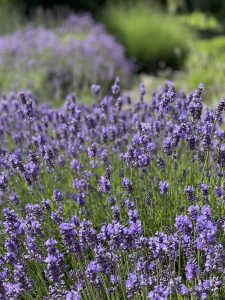
Purple haze
Rosemary, Rosmarinus officinalis L. ct. cineole and Rosmarinus officinalis L. ct. camphor, emits a mobile clear fluid with a sweet-herbaceous odour with strong fresh pungent-camphoraceous overtones. Rosemary ct. cineole is usually more sweet and fresh-pungent, while Rosemary ct. camphor is more green-herbaceous. As a perfume, it has a head note of high intensity, but again is not long-lasting. Extraction by steam distillation of the whole fresh leafy shrub in flower; throughout most of the year in Morocco and Algeria, and in spring in other Mediterranean countries. In Croation Dalmatia it is traditional to distill the leaves alone without the woody stems. The fragrance quality of the oil is inversely proportionate to the amount of woody stems used – hence the finest quality Rosemary oil, historically, was probably produced by Dalmation distillers between 1850 and 1939, the era when the Dalmatian Rosemary oil – a pure needle oil – was at peak production. 1 kg oil yield from 50-100 kg of the herb ( a good yield).
Therapeutic functions and indications:
Rosemarinus officinalis ct. cineole – a mild remedy with no cumulative toxicity. Rosemarinus officinalis ct. camphor – a medium-strength remedy with mild cumulative toxicity. Non-skin irritant, non-sensitizing.
Called for when the following symptoms are present – discouragement, pessimism, apathy, grief, depression, timidity, withdrawal, feels disconnected, low self-confidence, low self-worth, feels stuck in a rut, chronic tiredness, lethargy, cold hands and feet, sluggishness in the morning, and’or late afternoon, poor stamina, chronic headaches, poor concentration and memory, palpitations, chronic cough with sputum, chronic digestive problems, scanty or absent periods, varicose veins, muscle and joint aches and pains.
It stimulates the mind and promotes alertness, promotes motivation and self-confidence.

Eucalyptus
Blue-Gum Eucalyptus, Eucalyptus globulus Labill. It emits a mobile clear fluid with a fresh camphoraceous and somewhat leafy-green odour with faint sweet-wood undertones. As a perfume it has a head note of medium intensity and is not long-lasting. Steam distillation of the fresh leaves (and sometimes twigs) at many different times of the year, depending on location. 1 kg oil yield from 30-80 kg of the leaves (excellent yield).
Narrow-Leaf Eucalyptus, Eucalyptus radiata Sieb. ex DC. Emits a mobile clear fluid with a soft fresh-camphoraceous, somewhat sweet odour. As a perfume, it has a head note of medium intensity, is not long-lasting. Steam distillation of the fresh leaves and twigs at many different times of the year depending on location. 1 kg oil yield from 30-80 kg of leaves and twigs (excellent yield).
Over 700-plus species of eucalyptus originated in Australia and East Indonesia and many of these are used for industrial purposes today. Generally speaking there are three groups of Eucalyptus oils, each with their characteristic fragrance and related dominant constituent:
- Fresh-camphoraceous eucalypti with 1,8 cineole dominant – produces predominantly stimulating therapeutic actions. They include Blue-gum eucalyptus, Narrow-leaf eucalyptus, River red gum, Blue-leaf mallee, Green mallee, Gully gum or Smith’s gum, Woolly-butt, Forest red gum.
- Lemon-scented eucalypti with citronellal and/or citral dominant – imparts cooling and sedative therapeutic effects. These include Lemon-scented eucalyptus and Lemon-scented ironbark.
- Peppermint-scented eucalypti with piperitone and/or phellandrene dominant – collectively known in Australia as the peppermint gums or peppermint trees. They are Broad-leaf or blue peppermint eucalyptus, Peppermint or Sydney eucalyptus, and Grey peppermint eucalyptus.
Therapeutic functions and indications:
Blue-gum and Narrow-leaf Eucalyptus – a mild remedy with no cumulative toxicity. Non skin-irritant, non-sensitizing.
Applications – Apathy, poor motivation, despondency, depression, low self-confidence, emotional confusion and indifference, conflicting feelings, difficulty grieving, chest infections with cough, chest pain and wheezing, flu and colds with sneezing, sinus congestion, sore throat, fever; intestinal, skin, bladder and vaginal infections.
Stimulates the mind and promotes alertness. Promotes clarity and perspective. Promotes optimism and self-confidence.
Source: ‘Aromatica – A Clinical Guide to Essential Oil Therapeutics‘. Peter Holmes. LAc, MH